
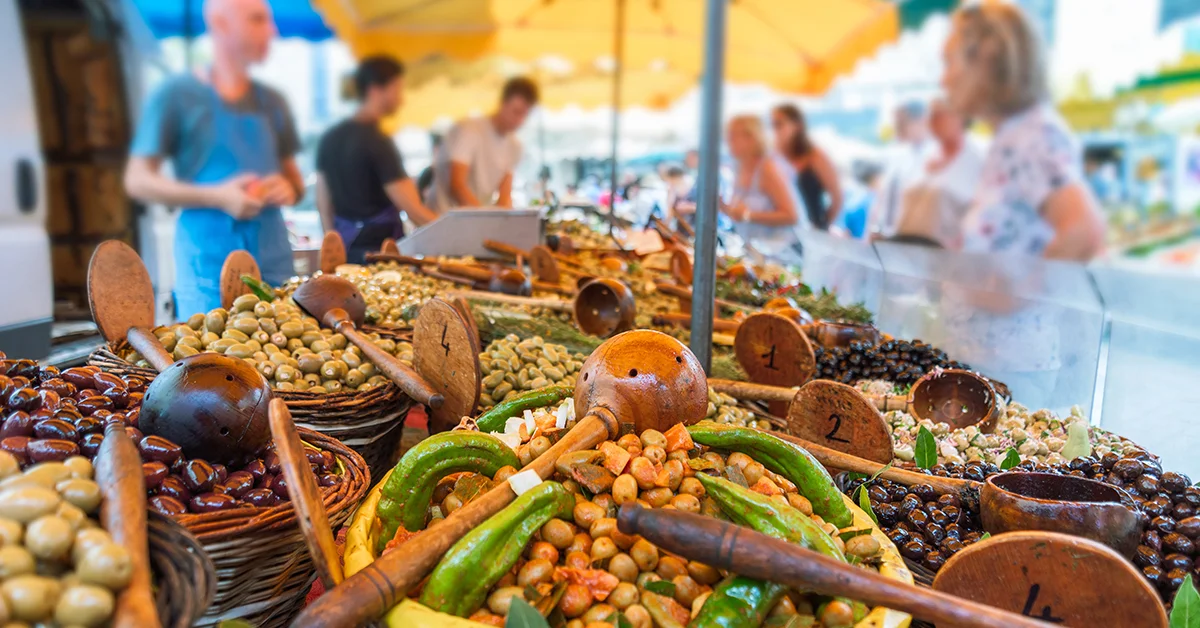
France and food share a bond that transcends mere sustenance. Across the country, from the cobblestone streets of Paris to the sun-drenched squares of Provence, open-air markets and covered food halls have served as the beating heart of French social and culinary life for centuries. In 2010, UNESCO inscribed the French gastronomic meal on its Intangible Cultural Heritage list, formally recognizing what generations of market vendors, home cooks, and celebrated chefs have always understood: the act of selecting, preparing, and sharing food lies at the very center of French civilization.
To visit a French market is to witness a daily ritual that has survived revolutions, world wars, and the rise of supermarket chains. Vendors arrive before dawn, arranging pyramids of seasonal fruit with an artist’s precision. Fishmongers lay glistening catches on beds of crushed ice. Fromagers display wheels of aged Comté alongside delicate rounds of chèvre, each bearing the distinct character of its terroir. For travelers seeking an authentic connection with French culture, these markets offer something no restaurant menu can replicate: the raw, unfiltered essence of regional identity expressed through food.
The Roots of French Market Culture
The French market tradition stretches back to the medieval period, when royal charters granted towns the right to hold weekly gatherings for the exchange of goods. Paris established its first major centralized food market, Les Halles, in 1137 under the reign of Louis VI, creating a commercial hub that would feed the capital for more than eight centuries. The writer Émile Zola famously described Les Halles as “the belly of Paris,” a designation that captured both the market’s physical enormity and its indispensable role in the city’s daily existence.
By the 18th and 19th centuries, the market system had become deeply woven into the rhythms of French provincial life. Each town and village developed its own weekly gathering, often organized around a central square or beneath a medieval covered hall known as a halle. These gatherings served purposes far beyond commerce. They were meeting places where news traveled, friendships formed, and the social fabric of rural France was maintained through the simple, repeated act of choosing the week’s provisions together.
The 20th century brought challenges. The relocation of Les Halles to the suburban warehouse complex at Rungis in 1969 marked the end of an era for Parisian market culture. Yet rather than signaling decline, this shift prompted a renaissance of smaller, neighborhood markets throughout the city. Today, Paris alone hosts more than 80 open-air and covered markets operating on rotating schedules throughout the week. Across the country, thousands more continue traditions that connect contemporary France to its medieval roots.
Paris: Where Market Culture Thrives on Every Corner
Marché Bastille
Stretching along the wide Boulevard Richard-Lenoir in the shadow of the July Column, Marché Bastille ranks among the largest and most vibrant open-air markets in the capital. The market unfolds above the enclosed portion of the Canal Saint-Martin, a waterway authorized by Napoleon Bonaparte in 1802 and subsequently covered during Baron Haussmann’s sweeping redesign of Paris in the 1850s and 1860s. History, quite literally, runs beneath the feet of shoppers browsing more than 100 vendor stalls each Thursday and Sunday morning.
The scale of Bastille impresses even seasoned market visitors. Fishmongers display platters of Brittany oysters alongside Mediterranean sea bass. Charcutiers offer dozens of regional sausages, from smoky Morteau to fragrant rosette de Lyon. Cheese vendors present selections that span the full geography of France, with creamy Brie de Meaux from the Île-de-France sitting beside sharp Roquefort from Aveyron and nutty Beaufort from the Alpine pastures of Savoie. The market’s atmosphere is lively and democratic, drawing chefs, local residents, and curious visitors in equal measure.
Marché Mouffetard
In the heart of the Latin Quarter, the narrow Rue Mouffetard descends gently from the Place de la Contrescarpe toward the church of Saint-Médard, its cobblestones lined with market stalls that evoke a Paris largely vanished elsewhere. Ernest Hemingway praised this street in his memoir A Movable Feast, and the market retains the intimate, village-like character that captivated the American writer during his years on the Left Bank.
Marché Mouffetard rewards those who approach it slowly. The rue’s gentle slope guides visitors past displays of seasonal produce arranged with careful attention to color and form, past fromageries where proprietors encourage tasting before purchasing, and past boulangers whose crusty baguettes emerge warm from ovens visible through shop windows. The surrounding neighborhood, with its proximity to the Panthéon and the Luxembourg Gardens, makes Mouffetard an ideal starting point for a day that combines culinary exploration with cultural discovery.
Marché des Enfants Rouges
Tucked within the Marais district, the Marché des Enfants Rouges holds the distinction of being Paris’s oldest surviving food market. Established in 1615, it takes its name from the red-clad orphans of the nearby charitable hospital who once frequented the area. Four centuries later, the market has evolved into a dynamic gathering place that blends traditional French produce stalls with an eclectic collection of prepared food vendors offering everything from Moroccan tagine to Japanese bento.
The market’s covered structure creates an atmosphere of convivial intimacy. Shared tables fill quickly during the lunch hour, and the sounds of sizzling pans and animated conversation blend into a soundtrack that feels distinctly Parisian. While the Enfants Rouges has gained international recognition, it retains a neighborhood sensibility that distinguishes it from more tourist-oriented destinations, particularly during weekday morning visits when local residents conduct their regular shopping rituals.
Lyon: France’s Gastronomic Capital
Les Halles de Lyon Paul Bocuse
Lyon’s claim to the title of France’s culinary capital rests on centuries of tradition, and no single institution embodies that heritage more completely than Les Halles de Lyon Paul Bocuse. The city’s first covered market opened in 1859, but the modern incarnation took shape in 1971 when a purpose-built facility was constructed in the La Part-Dieu district. Extensive renovations in 2006 transformed the space, and the legendary chef Paul Bocuse lent his name to the market, elevating its already formidable reputation.
Today, the market spans approximately 13,000 square meters across three floors, housing some 48 vendors whose standards reflect the twin pressures of representing both Lyon’s gastronomic legacy and Bocuse’s exacting vision. Visitors encounter displays of extraordinary charcuterie, including the city’s celebrated rosette and cervelas sausages. Seafood stalls present pristine selections from the Mediterranean and Atlantic coasts. The market’s fromageries offer regional treasures such as Saint-Marcellin, the small, creamy disc that has achieved near-mythical status among cheese enthusiasts.
Several acclaimed restaurants operate within Les Halles, allowing visitors to experience Lyonnaise cuisine prepared from the market’s own ingredients. The atmosphere on weekend mornings, when families gather for the tradition of shopping followed by a leisurely market lunch, captures the essence of why Lyon holds its distinguished place in French culinary culture.
Provence: Markets Bathed in Mediterranean Light
Aix-en-Provence
The markets of Aix-en-Provence unfold across the elegant squares and shaded boulevards that define this graceful university city. The daily produce market on Place Richelme operates in the shadow of the old town’s former château, now serving as the town hall, while larger gatherings fill the broad Cours Mirabeau on designated market days. Seasonal variations bring Christmas markets in December and special truffle markets during winter months, each event layered upon traditions stretching back centuries.
Provençal markets possess a sensory richness distinct from their northern counterparts. Stalls overflow with sun-ripened tomatoes, violet artichokes, and bundles of fresh herbs whose fragrance perfumes the surrounding streets. Vendors offer tapenade prepared from local olives, lavender honey harvested from nearby hillside apiaries, and bottles of rosé from the vineyards that carpet the surrounding countryside. The experience of shopping in Aix’s markets is inseparable from the city’s broader artistic heritage, as Cézanne’s beloved Montagne Sainte-Victoire rises in the distance beyond the market awnings.
The Provençal Market Calendar
Across the wider Provence region, nearly every town and village hosts a weekly market on its designated day. This rotating schedule means that dedicated food travelers can visit a different market each morning of the week, discovering the subtle variations in produce and specialty products that distinguish neighboring communities. The following table outlines some of the region’s most celebrated gatherings:
Day | Market | Notable Specialties |
Tuesday | Vaison-la-Romaine | Black truffles (winter), goat cheese, Côtes du Rhône wines |
Wednesday | Saint-Rémy-de-Provence | Olive oils, herbes de Provence, seasonal fruits |
Thursday | Aix-en-Provence (expanded) | Flowers, textiles, and full produce selection |
Friday | Carpentras | Berlingots (striped candies), strawberries from the Comtat |
Saturday | Apt | Crystallized fruits, Luberon lavender products |
Sunday | L’Isle-sur-la-Sorgue | Antiques alongside artisan food producers |
These markets operate primarily during morning hours, typically from early dawn through early afternoon. Arriving before 9 AM offers the fullest selection and the most authentic atmosphere, as local chefs and serious home cooks tend to complete their purchasing before the midday crowds arrive.
Beyond Paris, Lyon, and Provence
Bordeaux: Les Halles de Bacalan
Situated directly across from the Cité du Vin, Bordeaux’s interactive wine museum, Les Halles de Bacalan represents a modern interpretation of the covered market tradition. The beautifully designed hall houses 24 carefully selected merchants offering artisan products that reflect the Southwest’s distinctive culinary identity. Foie gras, Iberian ham, regional wines, truffles from Périgord, and handcrafted chocolates fill the stalls, while the market’s proximity to the Cité du Vin allows visitors to pair a wine education with an immersive food experience on the same morning.
Dordogne: Sarlat and Brive-la-Gaillarde
The Dordogne’s markets carry a particular mystique among French food enthusiasts. The Saturday market in Sarlat, set amid the golden limestone architecture of one of France’s best-preserved medieval towns, specializes in the region’s most celebrated products: foie gras, duck confit, walnut oil, and, during the winter months, the intoxicating black truffles of Périgord Noir. Nearby Brive-la-Gaillarde hosts a market so beloved that the singer-songwriter Georges Brassens immortalized it in song, with some 20,000 visitors passing through on peak market days to sample locally sourced produce, goat cheese from Rocamadour, and seasonal mushrooms gathered from surrounding forests.
Alsace: Strasbourg and Colmar
The markets of Alsace reflect the region’s unique position at the crossroads of French and Germanic culinary traditions. Year-round food markets in Strasbourg and Colmar feature specialties found nowhere else in France, including Flammekueche (the Alsatian flatbread topped with crème fraîche, onions, and lardons), Munster cheese aged in the nearby Vosges mountains, and choucroute prepared with locally grown cabbage. During the winter season, Strasbourg’s legendary Christmas market, the Christkindelsmärik, transforms the city center into a spectacular celebration of seasonal food, mulled wine, and artisan crafts that draws visitors from across Europe.
Making the Most of French Market Visits
Navigating French markets rewards a certain approach. Unlike supermarket shopping, where efficiency is paramount, the market experience invites deliberation and interaction. Vendors take genuine pride in their products and welcome questions about origin, preparation, and seasonal availability. A simple inquiry about which melon is ripest or how best to prepare a particular cut of meat often transforms a transaction into a conversation, and occasionally into an invitation to taste.
Several practical considerations enhance the experience. Bringing a reusable shopping bag is essential, as most vendors have moved away from providing plastic bags. Cash remains the preferred payment method at many smaller stalls, though card acceptance has expanded considerably in recent years. Most importantly, arriving early ensures access to the fullest selection, the most engaged vendors, and the genuine morning atmosphere that defines the French market tradition.
Seasonal awareness enriches every visit. Spring markets burst with asparagus, strawberries, and the first tender lettuces of the year. Summer brings stone fruits, tomatoes at their peak ripeness, and fragrant melons from Cavaillon. Autumn introduces wild mushrooms, game birds, and the new vintage of Beaujolais. Winter markets, though smaller in scale, offer concentrated intensity with truffles, oysters, and root vegetables that form the foundation of French comfort cooking.
Staying Connected in France: World Mobile eSIM
While immersing yourself in the sensory pleasures of French markets, reliable connectivity ensures you can navigate between venues, translate unfamiliar terms, look up recipes on the spot, and share your discoveries with friends and family back home. World Mobile offers convenient eSIM plans for France that eliminate the hassle of purchasing local SIM cards or paying expensive roaming charges.
The World Mobile France eSIM provides:
- Unlimited high-speed 5G/4G data throughout France
- Flexible duration options: 3 days ($9.90), 7 days ($19.90), 14 days ($29.90), or 21 days ($39.90)
- Coverage across 120+ destinations, the e-sim is valid for 5 years
The eSIM activates only when you land in France, meaning your plan duration begins exactly when you need it. Installation requires simply scanning a QR code sent via email, with no physical SIM card or shop visit necessary. With 24/7 support,World Mobile provides peace of mind for your French culinary adventure. Visit worldmobile.com/esim-c/france to select your plan.
A Culture Written in Flavor
France’s culinary markets represent far more than places to purchase ingredients. They embody a philosophy of living that prizes quality over convenience, relationships over transactions, and the deep satisfaction of food chosen with care and consumed with attention. From the grand sweep of Marché Bastille to the intimate stalls of a Provençal village square, each market offers a window into regional identity that no guidebook description can fully capture.
For travelers willing to rise early, engage with vendors, and surrender to the rhythms of a tradition older than the Republic itself, French markets reveal the country’s soul in its most honest and accessible form. Fill a bag with ripe peaches and aged cheese, find a bench beneath a plane tree, and allow yourself to participate in a ritual that has nourished the French spirit for nearly a thousand years. In a world increasingly defined by speed and uniformity, these markets remind us that the most meaningful experiences often begin with the simplest question: what looks good today?


