
Few European journeys offer the dramatic contrasts and cultural richness of an Austrian road trip from Vienna to Salzburg. This comprehensive guide takes you through one of Central Europe’s most scenic corridors, where imperial grandeur meets Alpine splendor across approximately 300 kilometers of stunning landscapes. Whether you’re drawn by the musical heritage of Mozart, the architectural marvels of Habsburg rule, or the breathtaking mountain vistas of the Austrian Alps, this route delivers an unforgettable travel experience that captures the very essence of Austria.
The drive itself can be completed in under four hours via the A1 motorway, but rushing would mean missing some of Europe’s finest hidden gems. This itinerary recommends spending four to seven days exploring the route, allowing time to wander through medieval towns, sample regional cuisines, and absorb the remarkable beauty that unfolds at every turn. From the sophisticated coffee houses of Vienna to the baroque splendor of Salzburg’s old town, every stop along this journey tells a story of art, music, and timeless European elegance.
Planning Your Vienna to Salzburg Route
The journey from Vienna to Salzburg presents travelers with several routing options, each offering distinct experiences and attractions. The fastest route follows the A1 motorway directly west, passing through Linz before reaching Salzburg. However, the most rewarding approach involves taking detours through the Wachau Valley, the Salzkammergut lake district, and charming towns that showcase Austria’s diverse character.
Timing your trip plays a crucial role in the overall experience. Summer months from June through August offer the warmest weather and longest daylight hours, perfect for outdoor activities and lake swimming. However, this period also brings the highest tourist numbers and accommodation prices. Spring and autumn present ideal conditions for those seeking pleasant weather, smaller crowds, and the stunning colors of blooming meadows or golden forests. Winter transforms the route into a magical landscape, though some mountain passes may require snow chains or alternative routing.
Your choice of vehicle matters significantly on this journey. While compact cars handle the motorways efficiently, those planning to explore mountain roads and smaller villages might prefer a vehicle with higher clearance and all-wheel drive, particularly during shoulder seasons. Rental cars are readily available at both Vienna and Salzburg airports, with one-way rentals allowing flexibility in your itinerary planning.
Essential Stops Along the Route
Vienna deserves at least two full days before departing westward. The imperial capital offers world-class museums including the Kunsthistorisches Museum and the Belvedere Palace, home to Klimt’s famous “The Kiss.” Stroll through the historic center, a UNESCO World Heritage Site, and experience the legendary Viennese coffee house culture at establishments like Café Central or Café Sacher. The city’s musical heritage comes alive at the Vienna State Opera or through countless street performances echoing through cobblestone squares.
The Wachau Valley, beginning roughly an hour west of Vienna, represents one of Austria’s most celebrated wine regions. This UNESCO-listed stretch along the Danube River features terraced vineyards climbing steep hillsides, medieval castle ruins, and picturesque villages where time seems suspended. Dürnstein, with its distinctive blue church tower, marks where King Richard the Lionheart was imprisoned during the Crusades. The valley’s Grüner Veltliner and Riesling wines are best sampled directly from local wineries, many offering tastings with panoramic river views.
Melk Abbey stands as one of Europe’s finest Baroque monasteries, its yellow façade dominating the landscape above the Danube. The abbey’s library, with over 100,000 medieval manuscripts, and its ornate church interior justify the detour for anyone interested in European religious architecture and history.
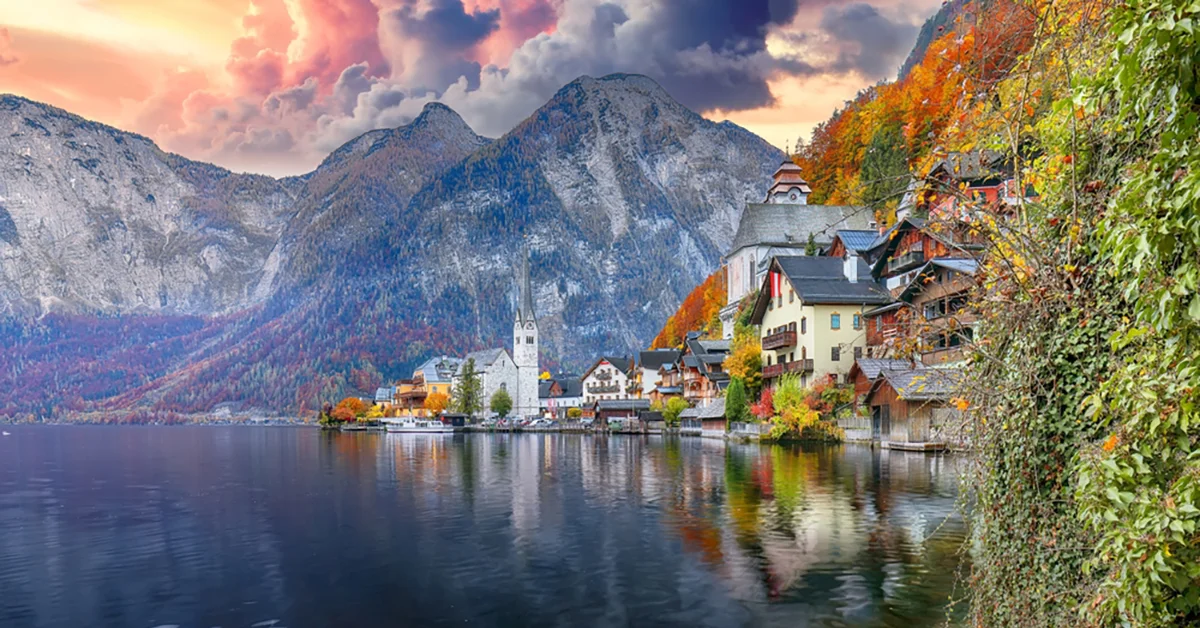
The Salzkammergut Region forms the heart of this journey, a lake district of extraordinary beauty that has attracted artists, royalty, and romantics for centuries. Hallstatt, often called the most photographed village in Austria, perches dramatically between mountain and lake, its pastel-colored houses reflected in crystal-clear waters. Beyond its postcard-perfect appearance, Hallstatt offers fascinating salt mine tours—this region’s “white gold” gave the area its wealth and name.
Day | Location | Highlights | Recommended Duration |
1-2 | Vienna | Schönbrunn Palace, St. Stephen’s Cathedral, museums, coffee houses | 2 full days |
3 | Wachau Valley | Wine tasting, Dürnstein, riverside cycling | 1 day |
4 | Melk & Linz | Melk Abbey, Linz cultural quarter, Danube views | 1 day |
5 | Hallstatt | Salt mines, lake cruise, Alpine panoramas | 1 full day |
6 | St. Wolfgang & Mondsee | Mountain railways, Sound of Music church | 1 day |
7 | Salzburg | Old Town, Mozart’s birthplace, fortress, gardens | 1-2 days |
Driving Tips and Practical Considerations
Austrian roads maintain excellent standards, but understanding local requirements prevents unnecessary complications. All vehicles using motorways must display a valid Vignette, a toll sticker available at border crossings, gas stations, and online through Austria’s motorway operator ASFINAG. The standard 10-day Vignette costs approximately €10 and covers unlimited motorway travel during its validity.
Speed limits follow European conventions: 130 km/h on motorways, 100 km/h on rural roads, and 50 km/h in urban areas unless otherwise posted. Austria enforces these limits strictly, with automated speed cameras throughout the network. Blood alcohol limits stand at 0.05%, lower than many other countries, and police conduct regular roadside checks.
Mountain driving requires particular attention, especially on scenic routes through the Salzkammergut. Steep grades, tight switchbacks, and single-lane sections demand careful driving, while weather conditions can change rapidly at higher elevations. During winter months, snow chains may be legally required on certain Alpine passes, and even summer travelers should prepare for occasional rain showers that make mountain roads slick.
Parking in historic town centers often proves challenging, as many Austrian towns restrict vehicle access to their old quarters. Most destinations provide clearly marked parking areas on the town periphery, often with reasonable daily rates or free options slightly further from main attractions.
Staying Connected: WorldMobile eSIM for Austria
Reliable mobile connectivity enhances any road trip, from navigating unfamiliar routes to sharing experiences in real-time. Traditional roaming charges can accumulate quickly across a week-long journey, making WorldMobile’s eSIM plans for Austria an attractive alternative for international travelers.
WorldMobile offers unlimited 5G/4G data plans specifically designed for Austria, with options ranging from 3 days at $9.90 to 21 days at $39.90. The plans include 20 international calling minutes and work across 120 destinations, meaning your eSIM remains useful for future European travels. Installation requires simply scanning a QR code received via email, with the data plan activating automatically upon landing in Austria rather than starting at purchase.
The convenience extends beyond initial setup—the eSIM remains valid for five years, serving as a ready solution for future trips without needing to purchase new SIM cards or navigate foreign phone shops. For road trippers relying on Google Maps navigation, restaurant recommendations, and real-time translation apps, having dependable unlimited data eliminates the frustration of spotty connections in rural Alpine areas.
Arriving in Salzburg: The Perfect Finale
Salzburg provides a fitting conclusion to this Austrian odyssey. Mozart’s birthplace radiates Baroque elegance, its old town nestled beneath the imposing Hohensalzburg Fortress that has watched over the city for nearly a millennium. The pedestrianized Getreidegasse, with its ornate guild signs and the house where Mozart was born, captures the spirit of historic Austria in concentrated form.
The city’s association with “The Sound of Music” draws countless visitors retracing the von Trapp family’s story through locations like Mirabell Gardens and Nonnberg Abbey. Yet Salzburg’s appeal extends far beyond film nostalgia—the annual Salzburg Festival ranks among Europe’s premier cultural events, while year-round the city offers exceptional dining, from traditional beer gardens to Michelin-starred restaurants.
Before departing, the climb or funicular ride to Hohensalzburg Fortress rewards travelers with sweeping views across the city, the Salzach River, and the surrounding Alpine peaks. From this vantage point, looking back eastward toward Vienna, the full scope of your Austrian journey becomes tangible—a route through history, culture, and some of Europe’s most magnificent landscapes.
Making the Most of Your Journey
The Vienna to Salzburg road trip succeeds best when approached with flexibility rather than rigid scheduling. Allow time for spontaneous discoveries: the unmarked viewpoint that reveals a perfect valley panorama, the village bakery producing exceptional Apfelstrudel, the local festival that transforms a quiet town into a celebration of regional traditions.
Accommodations range from grand historic hotels in major cities to family-run guesthouses in Alpine villages and converted farmhouses offering authentic Austrian hospitality. Booking in advance remains essential during peak summer months and the December Christmas market season, while shoulder seasons often allow more spontaneous planning.
This journey between Austria’s two greatest cities encapsulates centuries of European culture, artistic achievement, and natural beauty. Whether completed in four days or two weeks, the route from Vienna to Salzburg creates memories that linger long after the kilometers fade in the rearview mirror—a reminder why Austria remains one of Europe’s most compelling destinations for those who prefer exploring by open road.


