
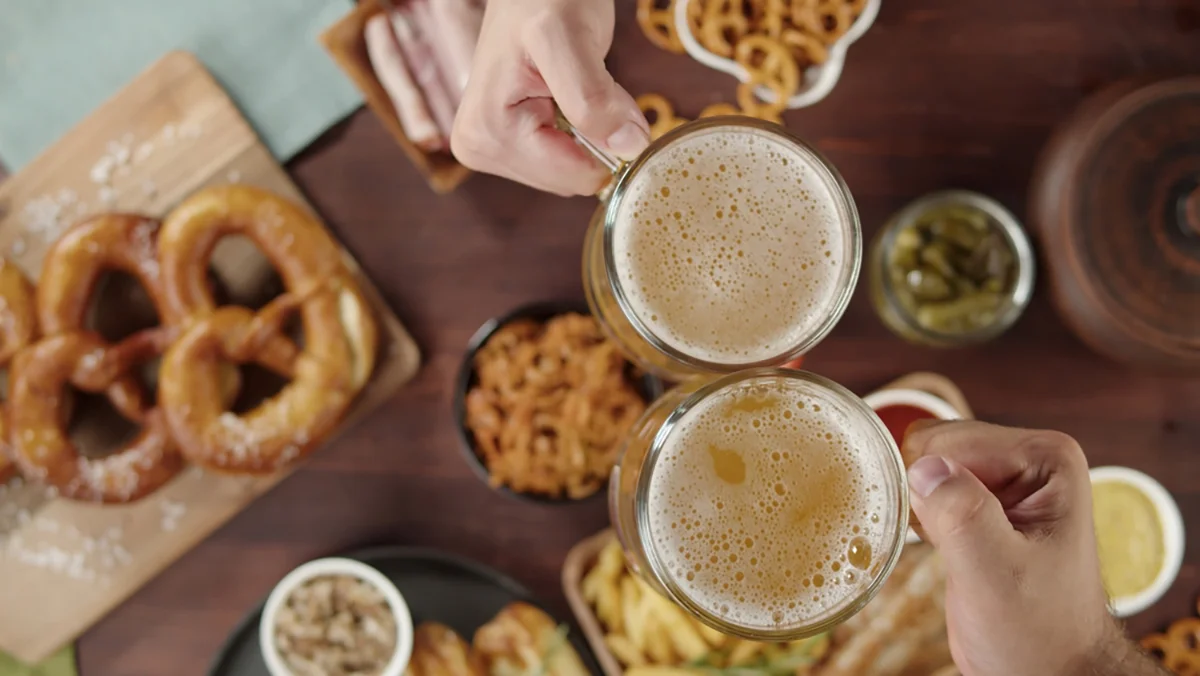
The Czech Republic and beer share a bond that runs deeper than any other nation on earth. Czechs consume more beer per capita than any country in the world, a distinction they have held for decades, and one that reflects not mere appetite but a profound cultural relationship with brewing that stretches back over a thousand years. Beer in Bohemia and Moravia is not simply a beverage. It is a social institution, an artistic tradition, and a source of national pride that has shaped the rhythms of daily life for centuries.
Traveling through the Czech Republic with an appreciation for its brewing heritage transforms an ordinary European trip into something altogether richer. From the medieval cellars of Prague to the hallowed grounds of Plzen, where the world’s first golden lager was born, every town and village harbors stories written in hops and malt. For visitors willing to venture beyond the tourist-friendly beer halls of the Old Town, an extraordinary world of monastery breweries, countryside pivovars, and fiercely traditional pubs awaits.
The Origins of Czech Brewing
Brewing in the lands that now form the Czech Republic dates to at least the 10th century, when Benedictine monks at the Břevnov Monastery near Prague began producing beer for their community. By the 13th century, King Wenceslas II had granted brewing rights to specific towns, establishing a system of civic breweries that would shape the nation’s beer culture for centuries. These rights, jealously guarded by townspeople, meant that brewing became woven into the civic identity of Czech communities in a way that had no parallel elsewhere in Europe.
The most consequential moment in global beer history occurred on October 5, 1842, in the Bohemian city of Plzeň. A Bavarian brewmaster named Josef Groll, hired by frustrated local citizens who had grown tired of poorly made top-fermented ales, produced the world’s first batch of pale lager. The combination of Plzeň’s remarkably soft water, prized Saaz hops from the nearby Žatec region, and Moravian malt created a beer of startling clarity and balanced bitterness. This golden liquid, which came to be known as Pilsner, would eventually inspire the most widely consumed style of beer on the planet.
The success of Pilsner Urquell, as Groll’s creation became known, ignited a revolution that rippled across continents. Yet while the rest of the world adopted and often diluted the pilsner concept, Czech brewers maintained their commitment to traditional methods, longer lagering times, and the distinctive character of Bohemian ingredients. This devotion to authenticity remains the foundation of Czech beer culture today.
Prague: Where History Meets the Glass
Prague offers an unmatched introduction to Czech beer culture, though the wisest visitors learn quickly to distinguish between establishments designed for tourists and those cherished by locals. The city’s brewing tradition predates its famous Gothic architecture, and some of the most rewarding beer experiences unfold in centuries-old cellars and unassuming neighborhood pubs that have changed little over generations.
U Fleků
No exploration of Prague’s beer heritage can bypass U Fleků, a brewery and beer hall that has operated continuously since 1499, making it one of the oldest in Europe. The establishment brews only one beer, a dark lager of 13 degrees Balling that possesses a complexity and smoothness that surprises visitors expecting something heavy or bitter. The caramel and coffee notes of this singular brew have remained essentially unchanged for centuries, produced using the same open-flame heating method the brewery has always employed. The sprawling complex of rooms and courtyards seats several hundred guests, yet the atmosphere during evening hours retains a boisterous, communal energy that feels genuinely Czech.
Klášterní pivovar Strahov
Perched on the hill overlooking Malá Strana, the Strahov Monastery Brewery revived a brewing tradition that dates to the monastery’s founding in 1142. The current brewery, reestablished in 2000, produces a rotating selection of unfiltered beers in small batches, served in a restaurant with sweeping views of Prague’s terracotta rooftops. The amber lager and wheat beer are particularly noteworthy, though seasonal specials reward repeat visitors. The setting alone, within the grounds of one of Europe’s most beautiful Premonstratensian monasteries, elevates the experience beyond the ordinary.
U Zlatého Tygra
Among Prague’s traditional pubs, U Zlatého Tygra, The Golden Tiger, holds a special place in the city’s literary and social history. The writer Bohumil Hrabal, one of the Czech Republic’s most beloved authors, treated this narrow pub as his personal office for decades. Václav Havel brought Bill Clinton here during a state visit in 1994, choosing this modest establishment over any grand venue to showcase authentic Czech culture. The pub serves only Pilsner Urquell, tapped with extraordinary care, and seats are limited. Arriving before the afternoon rush is advisable, as locals fill the room quickly and sharing tables with strangers is both expected and part of the charm.
Plzeň: The Birthplace of Pilsner
A ninety-minute train journey west of Prague delivers visitors to Plzeň, the city whose name became synonymous with the world’s most popular beer style. While the city possesses notable Renaissance and Art Nouveau architecture, the undeniable centerpiece of any visit is the Pilsner Urquell Brewery, where Josef Groll’s revolution began.
The brewery tour takes visitors through the entire production process, from the original copper brewhouses to the modern facilities that now produce millions of hectoliters annually. The highlight arrives in the historic cellars, hand-carved tunnels stretching nine kilometers beneath the brewery where lager once matured in massive oak barrels. Here, guides draw unfiltered, unpasteurized Pilsner Urquell directly from the barrel into ceramic jugs. The difference between this raw, cellar-fresh version and the bottled product available worldwide is revelatory, a softer, more nuanced beer with a creamy texture that makes the journey to Plzeň worthwhile on its own merits.
Beyond the main brewery, Plzeň’s Brewery Museum occupies a medieval malt house and offers a broader perspective on Bohemian brewing history, including original equipment, historical documents, and reconstructed brewing spaces that illustrate methods used before industrialization transformed the craft.
České Budějovice: The Other Budweiser
South of Prague lies České Budějovice, known in German as Budweis, a city whose brewing heritage sparked one of the longest trademark disputes in commercial history. The Budweiser Budvar brewery has produced beer here since 1895, though the city’s brewing tradition extends back to the 13th century when King Přemysl Otakar II granted it royal brewing rights.
Budvar’s brewery tour reveals a producer that still lagers its flagship beer for a full 90 days, more than double the industry standard, using water drawn from an Ice Age aquifer 300 meters below the brewery. This patience produces a beer of remarkable smoothness and character that bears little resemblance to its American namesake. The brewery’s visitor center and adjacent restaurant provide an excellent setting for extended tasting, while the city’s expansive main square, one of the largest in Europe, offers a pleasant backdrop for an afternoon stroll between glasses.
Understanding Czech Beer Styles
Czech beer classification differs significantly from systems used elsewhere in the world. Rather than categorizing beers primarily by color or flavor profile, the Czech system emphasizes gravity, measured in degrees Balling (or Plato), which indicates the density of sugars in the wort before fermentation. Understanding this system enriches any brewery visit and helps travelers navigate tap lists with confidence.
Beer Category | Description |
Desítka (10°) | A session-strength lager around 4% ABV, light and refreshing. The everyday beer of Czech pubs, perfect for long afternoons of conversation. |
Jedenáctka (11°) | Slightly fuller than a desítka, offering more malt character while remaining highly drinkable. An increasingly popular middle ground. |
Dvanáctka (12°) | The classic Czech premium lager at roughly 5% ABV. Pilsner Urquell and most flagship beers fall into this category. |
Světlé (Pale) | Golden to light amber in color, showcasing the floral, spicy character of Saaz hops. The style the world associates with Czech beer. |
Tmavé (Dark) | Rich, malty dark lagers with notes of caramel, chocolate, and roasted grain. Smoother and more approachable than many dark beer styles. |
Řezané (Cut) | A blend of pale and dark beer mixed at the tap, creating a unique amber beer. Ask for it at any pub serving both styles. |
Nefiltrované | Unfiltered beer retaining yeast and proteins, producing a hazy appearance and fuller flavor. Increasingly available at craft-focused establishments. |
When ordering in a traditional Czech pub, requesting a “velké pivo” (large beer, 0.5 liters) or “malé pivo” (small beer, 0.3 liters) is customary. Most pubs specialize in a single brewery’s offerings, a point of pride that ensures each establishment develops expertise in serving its chosen brand at the peak of quality.
Czech Pub Culture and Etiquette
The Czech pub, or hospoda, operates according to customs that may surprise visitors accustomed to the bar cultures of other countries. Understanding these traditions enhances the experience considerably and earns the respect of locals who take their pub culture seriously.
Upon entering a traditional hospoda, the waiter will typically bring you a beer without asking. This is not presumptuous but rather a reflection of the understanding that one enters a pub to drink beer. If you prefer something else, simply say so when the glass arrives. Your waiter will keep a tally of drinks on a small slip of paper left at your table, and a fresh beer will appear as your current one nears empty unless you place a coaster or beer mat over the top of your glass, the universal Czech signal that you have finished drinking.
Czechs consider the quality of a beer’s foam, or pěna, an essential indicator of both the beer’s freshness and the publican’s skill. A properly poured Czech lager features a dense, creamy head that the server may sculpt with a knife-like tool. Requesting a beer “hladinkou,” with a smooth, flat surface and minimal foam, or “na mlíko,” a glass of nearly pure foam designed for gentle sipping, demonstrates familiarity with local customs that locals genuinely appreciate.
Tipping in Czech pubs follows a straightforward convention. Rounding up the bill to the nearest convenient amount is standard practice. When paying, state the total you wish to pay rather than leaving coins on the table, as the waiter typically makes change from a wallet carried at the hip.
Beyond the Cities: Regional Brewing Treasures
While Prague, Plzeň, and České Budějovice anchor any Czech beer itinerary, some of the most memorable experiences await in smaller towns and the countryside. The Žatec region in northwest Bohemia, where the legendary Saaz hops have been cultivated since at least the 8th century, offers tours of hop gardens and a dedicated hop museum that illuminates why Czech hops command respect among brewers worldwide.
The Moravian city of Brno has emerged as a center of Czech craft brewing, with establishments like Pivovar Pegas and Lucky Bastard Brewery pushing boundaries while maintaining respect for Czech brewing foundations. The university town’s lively atmosphere and lower prices compared to Prague make it an attractive base for exploring southeastern Czech beer culture.
Smaller towns such as Litoměřice, Louny, and Humpolec harbor traditional breweries that have served their communities for generations, often with taprooms where visitors drink alongside farmers, factory workers, and local officials in settings untouched by tourism. These encounters, conducted over pints of honestly made lager in rooms that smell of hops and history, represent Czech beer culture at its most authentic.
Planning Your Czech Beer Journey
The Czech Republic’s compact geography makes a beer-focused itinerary remarkably practical. Prague serves as the natural starting point, with Plzeň easily reached by train in under two hours and České Budějovice in roughly the same time heading south. The national rail system, comfortable and affordable, connects all major brewing destinations efficiently.
Spring and early autumn offer the most pleasant conditions for brewery visits, with mild temperatures ideal for walking between establishments and enjoying beer gardens that open across the country when the weather permits. Summer brings Czech beer festivals, including the Czech Beer Festival in Prague each May, which gathers dozens of breweries under one roof for an unrivaled tasting experience.
Accommodation in brewery-affiliated hotels and pensions adds another dimension to the journey. Several Czech breweries operate guesthouses where visitors sleep above the very cellars where their evening beer was made, waking to the gentle aroma of malt and the promise of another day spent in the company of the world’s finest brewing tradition.
Staying Connected in the Czech Republic: World Mobile eSIM
While immersing yourself in the analog pleasures of Czech pub culture, reliable connectivity proves invaluable for navigating between breweries, translating menus, and sharing your discoveries with fellow beer enthusiasts back home. World Mobile offers convenient eSIM plans for the Czech Republic that eliminate the hassle of purchasing local SIM cards or paying expensive roaming charges.
The World Mobile Czech Republic eSIM provides:
- Unlimited high-speed 5G/4G data throughout the Czech Republic
- Flexible duration options: 3 days ($9.90), 7 days ($19.90), 14 days ($29.90), or 21 days ($39.90)
- 20 international calling minutes included
- Coverage across 120+ destinations with one installation that remains valid for 5 years
- Unlimited data coverage in 80+ destinations
- Auto-activation only when you land, so your plan begins exactly when needed
Installation requires simply scanning a QR code sent via email, with no physical SIM card or shop visit necessary. With 24/7 support,World Mobile provides peace of mind for your Czech adventure. Visitworldmobile.com/esim-c/czech-republic to select your plan.
A Living Tradition in Every Glass
Czech beer culture represents far more than the consumption of an exceptionally well-made beverage. It embodies a philosophy of communal life, of taking time to sit with friends and strangers alike in spaces where conversation flows as freely as the lager. From the medieval cellars of U Fleků to the revolutionary birthplace of pilsner in Plzeň, each establishment tells a chapter of a story that has been unfolding for more than a millennium.
For visitors willing to look beyond the surface of well-known tourist attractions, the Czech Republic reveals itself most honestly through its beer culture. Order a dvanáctka, watch the server sculpt a perfect head of foam, raise your glass with the traditional toast of “Na zdraví,” and allow yourself to become part of a tradition that has sustained communities, inspired artists, and brought people together for longer than almost any other cultural practice in Central Europe. In a world that often rushes past its pleasures, Czech beer culture reminds us that the finest things in life deserve to be savored slowly.


