
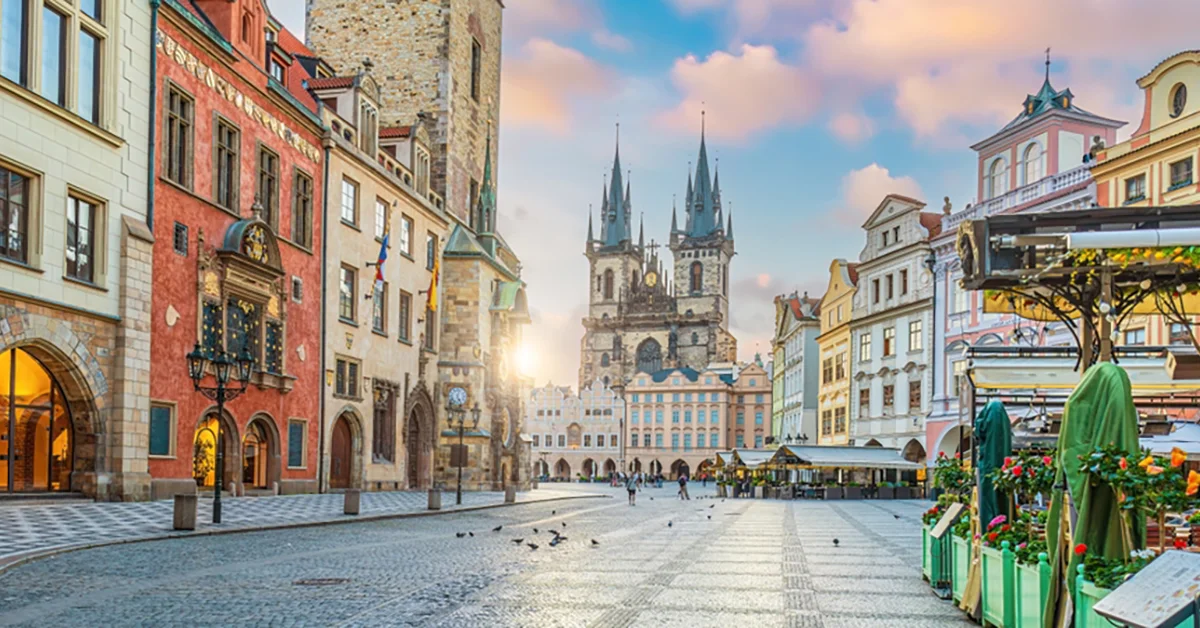
Prague captivates visitors with its Gothic spires, cobblestone lanes, and centuries of history layered upon every corner. Yet beyond the Charles Bridge crowds and Old Town Square performers lies a region of extraordinary beauty and cultural significance that many travelers never discover. The Bohemian countryside surrounding the Czech capital offers fairytale castles perched on dramatic cliffs, medieval towns frozen in time, and landscapes that inspired composers, poets, and artists for generations.
The Czech Republic’s compact geography makes Prague an ideal base for exploration. Within one to two hours by train or car, visitors can reach destinations that rival the capital in historical importance while offering a more intimate glimpse into Czech culture. These excursions reveal a different rhythm of life—one where afternoon coffee stretches into evening conversation, where castle ruins tell stories of Bohemian kings, and where the rolling countryside changes character with each passing kilometer.
Český Krumlov: A Renaissance Jewel
No discussion of day trips from Prague begins anywhere other than Český Krumlov. This UNESCO World Heritage town curves along the Vltava River approximately 180 kilometers south of the capital, its medieval center so remarkably preserved that walking through its narrow lanes feels like stepping into a Renaissance painting. The journey takes roughly three hours by bus or train, making it a full but deeply rewarding day.
The town’s centerpiece is its castle complex, the second largest in the Czech Republic after Prague Castle. Rising dramatically above the red-roofed townscape, the castle’s distinctive round tower—painted in Renaissance sgraffito technique—has become an icon of Bohemian architecture. The complex evolved over six centuries under various noble families, most notably the Rožmberks and later the Schwarzenbergs, who left their marks through successive architectural additions and modifications.
Within the castle grounds, the Baroque theater ranks among Europe’s best-preserved examples of its kind. Built in 1682, this intimate venue retains its original stage machinery, backdrops, and costumes—a working museum of theatrical history that occasionally hosts authentic performances. The castle gardens, meanwhile, cascade down terraces offering panoramic views across the town and surrounding hills.
Beyond the castle, Český Krumlov rewards aimless wandering. The main square hosts a plague column and Renaissance fountain, while surrounding streets contain galleries, artisan workshops, and restaurants serving traditional South Bohemian cuisine. During summer months, visitors can rent boats or inner tubes to float the gentle Vltava—a quintessentially Czech leisure activity that reveals the town from an entirely different perspective.
Kutná Hora: Silver, Bones, and Gothic Grandeur
East of Prague lies Kutná Hora, a town whose fortune rose spectacularly in the Middle Ages when silver deposits made it the second wealthiest city in the Bohemian Kingdom. The approximately 80-kilometer journey takes just over an hour by direct train, making this an accessible half-day or full-day excursion depending on your interests.
The town’s most visited attraction requires a certain temperament to appreciate fully. The Sedlec Ossuary, popularly known as the “Bone Church,” contains the artistically arranged remains of between 40,000 and 70,000 people. Following a plague epidemic and the Hussite Wars, the small chapel became a repository for human bones, which a local woodcarver later fashioned into elaborate decorations including a chandelier containing every bone in the human body, a Schwarzenberg coat of arms, and garlands that drape the vaulted ceiling. The effect is simultaneously macabre and strangely beautiful—a meditation on mortality that has drawn visitors for centuries.
Kutná Hora’s Gothic cathedral of St. Barbara provides a dramatic counterpoint to the ossuary’s darkness. Dedicated to the patron saint of miners, this UNESCO-listed masterpiece took nearly 500 years to complete. The soaring interior features remarkable frescoes depicting medieval mining life, while flying buttresses and ornate spires make the exterior equally impressive. The walk from town to the cathedral follows a terrace lined with Baroque statues, offering views across the valley that justify the journey alone.
The town center preserves its medieval street plan and numerous historic buildings including the Italian Court, where silver coins were minted for the entire kingdom. Several excellent restaurants serve traditional Czech dishes at prices considerably lower than Prague, and the generally quieter atmosphere allows for contemplation impossible in the capital’s busiest areas.
Karlštejn Castle: A Gothic Fortress in the Forest
Karlštejn Castle stands as perhaps the most iconic image of Bohemian medieval architecture. Perched dramatically on a limestone cliff above the Berounka River valley, this 14th-century fortress was constructed by Emperor Charles IV specifically to house the imperial crown jewels and holy relics. The castle sits approximately 30 kilometers southwest of Prague, reachable in under an hour by frequent trains from the main station.
The approach to Karlštejn builds anticipation beautifully. The village below the castle has developed to serve visitors, with a main street lined with restaurants, souvenir shops, and craft studios leading upward toward the fortress gates. The 20-minute uphill walk offers increasingly impressive views of the castle’s distinctive layered towers, each successive structure rising higher than the one before—a deliberate architectural progression representing the hierarchy of sacred objects once stored within.
Three tour routes explore different sections of the castle. The basic tour covers the Imperial Palace and Great Tower, while more extensive options include the Chapel of the Holy Cross, where the most sacred treasures were kept behind multiple locked doors and elaborate security measures. The chapel’s interior, encrusted with semi-precious stones and containing remarkable Gothic panel paintings by Master Theodoric, represents one of Europe’s finest examples of medieval sacred art.
The surrounding countryside offers excellent hiking opportunities for those wishing to extend their visit. The Bohemian Karst region features dramatic limestone formations, caves, and forests that provide welcome respite from summer heat. Several well-marked trails connect Karlštejn with neighboring villages where traditional pubs serve local beer and hearty meals to hungry walkers.
Planning Your Day Trip Adventures
Successful day trips from Prague require some advance consideration, though the Czech Republic’s excellent transportation infrastructure makes spontaneous excursions entirely feasible. The following table summarizes essential information for the destinations discussed:
Destination | Distance from Prague | Travel Time | Best Transport | Recommended Duration |
Český Krumlov | 180 km | 2.5–3 hours | Bus (RegioJet/FlixBus) | Full day (8–10 hours) |
Kutná Hora | 80 km | 1–1.5 hours | Train (direct) | Half or full day |
Karlštejn | 30 km | 40 minutes | Train (frequent) | Half day (4–5 hours) |
Terezín | 60 km | 1 hour | Bus | Half day (4–5 hours) |
Konopiště Castle | 50 km | 1 hour | Bus + walk | Half day (4–5 hours) |
Train travel in the Czech Republic offers remarkable value and reliability. České dráhy, the national railway, operates frequent services to most destinations, with tickets purchasable at stations, through their mobile app, or online. First-class carriages provide additional comfort at modest premium prices. For Český Krumlov specifically, private bus companies often prove faster and more convenient than rail connections requiring transfers.
Additional Worthy Excursions
Beyond the destinations detailed above, several other day trips merit consideration depending on your interests and available time:
- Terezín, the former concentration camp and Jewish ghetto, offers a sobering but essential historical experience approximately one hour north of Prague
- Konopiště Castle showcases the hunting obsessions of Archduke Franz Ferdinand, whose assassination triggered World War I
- The spa town of Karlovy Vary provides elegant 19th-century architecture and natural thermal springs in a dramatically forested valley
- Pilsen, birthplace of pilsner beer, combines brewing heritage tours with an attractive historic center
Each destination reveals different facets of Czech history and culture, from the darkest chapters of the 20th century to the pleasurable traditions of spa culture and brewing that have defined regional identity for centuries.
Staying Connected: World Mobile eSIM for Czech Republic
Exploring beyond Prague’s city center demands reliable mobile connectivity for navigation, translation, and real-time travel updates. World Mobile offers unlimited data eSIM plans specifically designed for travelers to the Czech Republic, eliminating concerns about expensive roaming charges or hunting for local SIM cards.
The WorldMobile Czech Republic eSIM provides unlimited high-speed 5G/4G data with flexible duration options to match any itinerary:
- 3 days: $9.90 USD
- 7 days: $19.90 USD
- 14 days: $29.90 USD
- 21 days: $39.90 USD
Our plans include coverage across 120+ destinations worldwide, and unlimited coverage across 80+ destinations. The eSIM activates only upon arrival in the Czech Republic, so your plan duration begins exactly when needed—not while still at home.
Installation requires simply scanning a QR code delivered via email, with no physical SIM card or shop visit necessary. World Mobile provides 24/7 multilingual support should any questions arise. For travelers planning day trips where reliable GPS navigation and real-time train schedules prove essential, this connectivity solution offers genuine peace of mind.
Beyond the Tourist Trail
The destinations described here represent only the most celebrated day trips from Prague. With additional time and adventurous spirit, travelers might discover the rock formations of Bohemian Switzerland National Park, the wine cellars of southern Moravia, or the industrial heritage of Ostrava in the country’s east. The Czech Republic’s relatively small size — roughly equivalent to South Carolina — belies its extraordinary density of cultural and natural attractions.
What distinguishes these excursions from similar offerings elsewhere in Europe is accessibility. The combination of efficient transportation, reasonable prices, and English-language signage at major attractions makes independent exploration straightforward even for first-time visitors. Yet despite significant tourist development, particularly at locations like Český Krumlov and Karlštejn, authentic Czech culture remains tangible. The grandmother selling fresh fruit at a village bus stop, the family enjoying Sunday lunch at a castle restaurant, the locals fishing quietly along riverbanks—these glimpses of everyday life transform day trips from sightseeing exercises into genuine cultural encounters.
Prague’s magic intensifies rather than diminishes when experienced alongside its surrounding region. The capital’s density of architectural and cultural treasures can overwhelm even enthusiastic visitors after several days. Day trips provide necessary breathing room while revealing that the qualities drawing visitors to Prague—stunning architecture, deep history, excellent food and drink, and a certain Central European atmosphere impossible to manufacture—extend throughout Bohemia. Return to the city each evening with fresh perspectives, new stories, and appreciation for how thoroughly this remarkable region rewards exploration.


