
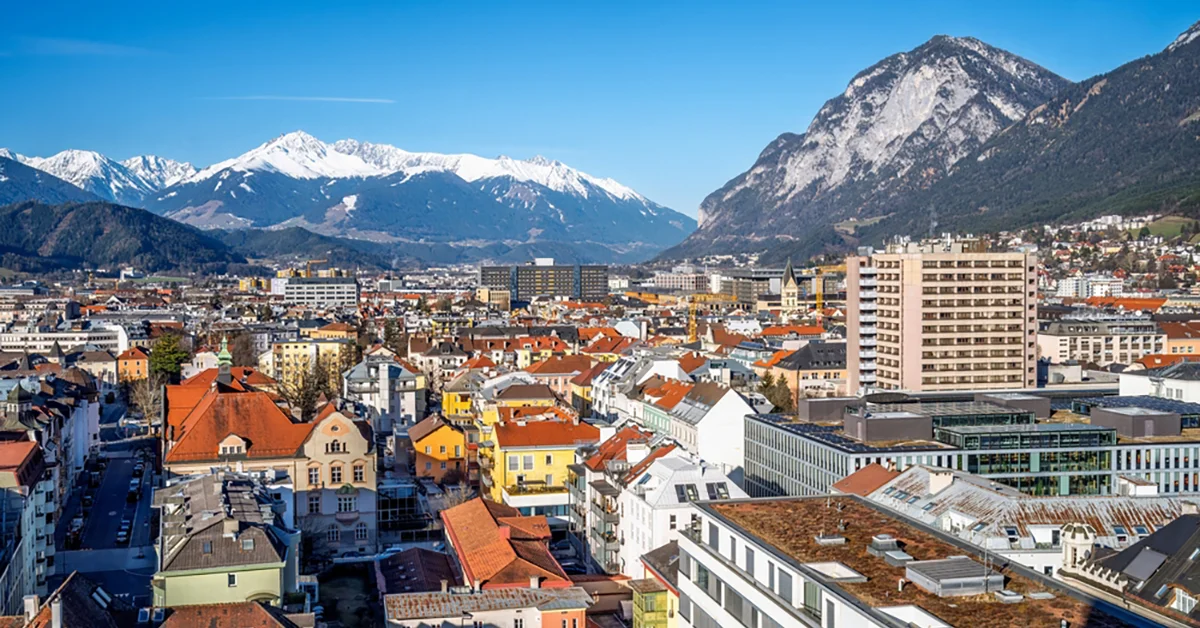
Innsbruck, the capital of Austria’s Tyrol region, stands as one of Europe’s most captivating destinations where snow-capped Alpine peaks dramatically frame centuries of Habsburg imperial grandeur. Nestled in the Inn Valley at the crossroads of major European routes, this enchanting city of 130,000 residents offers travelers an extraordinary blend of world-class skiing, historic architecture, and Austrian cultural traditions that few destinations can match.
Unlike overcrowded Alpine resorts that have sacrificed authenticity for tourism dollars, Innsbruck maintains its genuine character as a living, working city. University students fill the medieval Old Town’s cafes, local families ski the nearby slopes on weekday afternoons, and traditional Tyrolean customs continue uninterrupted despite the steady stream of international visitors. The result is an Alpine experience that feels both accessible and authentically Austrian.
Why Innsbruck Deserves Your Attention
Innsbruck offers exceptional value compared to Swiss Alpine destinations. Accommodation costs typically run 40-50% lower than equivalent options in Zermatt or St. Moritz, while lift passes and dining remain remarkably affordable by Austrian standards. A hearty Tyrolean lunch with local beer rarely exceeds €20, and charming guesthouses in the historic center start from €80 per night during peak winter season.
The city’s geographical position creates unique advantages for active travelers. Nine distinct ski areas lie within 30 minutes of the city center, all accessible via a single ski pass. Summer transforms these same mountains into hiking paradise, with over 400 kilometers of marked trails ranging from gentle valley walks to challenging alpine ascents. The Nordkette mountain range rises directly from the city’s northern edge, allowing visitors to travel from medieval streets to 2,300-meter peaks in just 20 minutes via the Hungerburgbahn funicular and Nordkettenbahn cable car.
Most importantly, Innsbruck combines natural beauty with genuine historical significance. The Habsburgs chose this strategic location as their imperial seat, leaving behind architectural treasures that now showcase five centuries of European history. The Golden Roof, Imperial Palace, and Court Church stand as testaments to the city’s role in shaping the continent’s political and cultural development.
Essential Planning Information for Your Innsbruck Adventure
The optimal visiting window depends entirely on your interests. Winter sports enthusiasts should target December through March for the best snow conditions, with January and February offering the most reliable powder. Summer hikers find ideal conditions from June through September, while shoulder seasons (May and October) provide fewer crowds and pleasant weather for city exploration and lower-altitude activities.
Transportation within Innsbruck proves remarkably convenient. The city’s compact size makes walking the preferred method for exploring the historic center, while an efficient tram and bus network connects outlying neighborhoods and nearby villages. The Innsbruck Card provides unlimited public transport plus free entry to major attractions, representing excellent value for stays of three days or more. Renting a car becomes worthwhile only for those planning extensive exploration of remote mountain valleys or neighboring regions.
Accommodation ranges from historic hotels in converted medieval buildings to modern ski lodges with direct slope access. The sweet spot for most travelers lies in family-run pensions and boutique hotels within walking distance of the Old Town, where personalized service and local knowledge enhance the authentic Tyrolean experience. Book well in advance for Christmas markets (late November through December) and peak ski weeks in February.
Must-See Attractions: Where History and Nature Converge
The Golden Roof and Medieval Old Town
The Goldenes Dachl (Golden Roof) represents Innsbruck’s most iconic landmark and the perfect starting point for exploration. Emperor Maximilian I commissioned this ornate balcony in the late 15th century, covering it with 2,657 fire-gilded copper tiles that still gleam against the Alpine backdrop. The balcony served as a royal box for watching tournaments and festivities in the square below, and the small museum behind it provides fascinating context about medieval court life.
Surrounding the Golden Roof, the Altstadt (Old Town) unfolds as a remarkably preserved medieval streetscape. Narrow lanes wind between colorfully painted buildings with distinctive Tyrolean facades, opening onto intimate squares where cafe tables spill outdoors during warmer months. Herzog-Friedrich-Strasse and Maria-Theresien-Strasse offer the finest examples of historic architecture, while hidden courtyards reveal unexpected restaurants and artisan workshops.
Imperial Palace and Court Church
The Hofburg Imperial Palace showcases Habsburg magnificence through lavishly decorated state rooms, including the famous Giant’s Hall with its ceiling fresco depicting the Tyrolean dynasty. Unlike Vienna’s overwhelming Schönbrunn, Innsbruck’s palace maintains human scale while delivering equally impressive royal interiors. Empress Maria Theresa’s apartments particularly captivate visitors with their rococo elegance and mountain views.
Adjacent to the palace, the Hofkirche (Court Church) houses one of Europe’s most important Renaissance tombs. Emperor Maximilian I’s cenotaph stands surrounded by 28 larger-than-life bronze statues representing his ancestors and heroes, including the legendary King Arthur. The church’s intimate atmosphere allows close examination of these remarkable sculptures, considered masterpieces of German Renaissance metalwork.
Nordkette: The Mountain Above the City
The Nordkette range defines Innsbruck’s dramatic skyline and provides the most accessible high-Alpine experience in any major European city. Zaha Hadid’s futuristic funicular stations connect the historic center to the Hungerburg plateau, from where cable cars continue to Seegrube (1,905m) and finally Hafelekar summit (2,334m). The journey takes just 20 minutes but transports visitors from urban sophistication to genuine Alpine wilderness.
From the summit, hiking trails radiate across the Karwendel Nature Park, one of the Alps’ largest protected areas. Even non-hikers find the panoramic views spectacular, with the city spread below and peaks stretching toward Italy in one direction and Germany in the other. The restaurant at Seegrube serves traditional Tyrolean cuisine with views that justify any price, making it perfect for leisurely Alpine lunches.
Best Experiences and Local Adventures
World-Class Winter Sports
Innsbruck hosted the Winter Olympics twice (1964 and 1976), establishing infrastructure that continues serving recreational skiers today. The Olympia SkiWorld Innsbruck pass covers nine resorts totaling 300 kilometers of runs, from beginner-friendly Mutters to challenging Axamer Lizum. Free ski buses connect all areas, eliminating the need for rental cars and allowing different terrain each day.
Beyond downhill skiing, the region excels at Nordic disciplines. Cross-country trails crisscross the Inntal valley floor, while the Olympic ski jump at Bergisel offers tours and, for the adventurous, tandem jumps with experienced athletes. Ice climbing, snowshoeing, and winter hiking provide alternatives for those seeking mountain experiences without skiing.
Summer Hiking and Alpine Adventures
Summer transforms the ski slopes into flower-filled meadows crossed by hundreds of hiking trails. The Innsbruck Trek, a multi-day route circling the city via mountain huts, ranks among Austria’s finest long-distance walks. Day hikers find endless options, from gentle valley paths suitable for families to demanding peak ascents requiring mountaineering experience.
Mountain biking has exploded in popularity, with dedicated trails and lift-served downhill parks catering to all skill levels. Paragliding launches from multiple peaks provide bird’s-eye perspectives, while summer tobogganing and Alpine coaster rides offer family-friendly thrills. The Inn River supports kayaking and rafting, adding water-based options to the mountain activities.
Comprehensive Experience Comparison Guide
Attraction | Best Season | Time Needed | Best For | Key Features |
|---|---|---|---|---|
Old Town | Year-round | Half day | History lovers, photographers | Medieval architecture, Golden Roof |
Nordkette | Year-round | 3-6 hours | Hikers, view seekers | Panoramic views, Alpine access |
Imperial Palace | Year-round | 2-3 hours | Habsburg history fans | Royal apartments, Giant’s Hall |
Ski Resorts | Dec-March | Full day+ | Winter sports enthusiasts | 9 areas, Olympic heritage |
Bergisel Jump | Year-round | 1-2 hours | Sports fans, families | Zaha Hadid design, city views |
Swarovski World | Year-round | 3-4 hours | Art lovers, families | Crystal installations, gardens |
Practical Tips for Innsbruck Success
The Innsbruck Card represents exceptional value for active sightseers. Available for 24, 48, or 72 hours, it includes unlimited public transport, one round-trip on each cable car (including Nordkette), and free entry to all major museums and attractions. The card pays for itself within a single day of normal sightseeing and removes the hassle of individual ticket purchases.
Weather awareness proves essential for mountain activities. Alpine conditions can change rapidly, and morning sunshine often gives way to afternoon thunderstorms in summer. Check local forecasts before heading to higher elevations, carry layers regardless of valley temperatures, and respect posted warnings on hiking trails. Winter visitors should verify current snow conditions and avalanche advisories before venturing off-piste.
Budget planning should account for Austria’s cash-friendly culture. While major hotels and restaurants accept cards, smaller mountain huts, market vendors, and some traditional establishments prefer cash. ATMs throughout the city center provide easy access to euros, but bringing sufficient cash prevents disappointment when discovering that perfect Alpine hut serving homemade apple strudel.
Seasonal Considerations and Optimal Timing
Each season in Innsbruck offers distinct advantages for different types of travelers. Winter (December through March) delivers world-class skiing, magical Christmas markets, and cozy evenings in traditional wine taverns. Snow transforms the city into a postcard-perfect Alpine scene, though accommodation prices peak during Christmas and New Year periods.
Summer (June through September) opens the hiking trails and brings extended daylight hours perfect for outdoor exploration. The city comes alive with outdoor dining, cultural festivals, and locals enjoying their mountains. July and August see the highest temperatures and most domestic tourists, while June and September offer better conditions for active travelers.
Shoulder seasons provide compelling alternatives for experienced travelers. Late spring (May) sees wildflowers blooming at lower elevations while ski areas sometimes offer late-season snow. Early autumn (October) brings spectacular fall colors to the forests and harvest festivals featuring new wine and traditional foods. Both periods offer reduced crowds and lower prices while maintaining pleasant conditions for city exploration.
Staying Connected: Essential Communication for Alpine Adventures
WorldMobile’s unlimited eSIM data plans provide uninterrupted connectivity for exploring Innsbruck’s mountains and historic streets. Traditional roaming charges can quickly become expensive in Austria, making unlimited eSIM technology the perfect solution for international travelers who need constant, worry-free data access throughout their Alpine adventure.
WorldMobile offers unlimited eSIM plans for Austria starting from just $9.90 for 3 days, with options extending to 7 days ($19.90), 14 days ($29.90), and 21 days ($39.90). These plans deliver high-speed internet data without caps or throttling, eliminating the need to purchase local SIM cards or worry about unlocking phones. The service activates instantly upon arrival, ensuring unlimited access to maps, translation apps, and communication services from the moment you land in Austria.
Unlimited internet access becomes particularly crucial when exploring Alpine terrain. Real-time GPS navigation proves invaluable on mountain trails, while instant weather updates help avoid dangerous conditions. The ability to share photos and videos without data concerns enhances the travel experience, and constant communication with travel companions significantly improves safety when hiking in remote areas. WorldMobile’s eSIM covers Austria plus 120 additional destinations with a single installation that remains valid for 5 years, making it ideal for travelers planning future European adventures.
Embracing Innsbruck’s Unique Alpine Spirit
Innsbruck represents that rare destination where natural grandeur and human history enhance rather than compete with each other. The Habsburgs chose wisely when selecting this Alpine crossroads as their imperial seat, and modern visitors benefit from centuries of investment in art, architecture, and infrastructure that make the city so accessible today.
Supporting local businesses ensures these communities continue thriving while maintaining their authentic character. Choosing family-run guesthouses over international chains, dining at traditional Tyrolean restaurants, and engaging local guides for mountain adventures directly support the people who make this region special.
Innsbruck offers that increasingly rare combination of genuine cultural depth, natural beauty, and practical accessibility that makes for truly memorable travel. Whether carving fresh powder on Olympic slopes, wandering medieval streets beneath the Golden Roof, or simply savoring apple strudel while watching clouds drift past Alpine peaks, visitors discover a destination that rewards exploration with experiences unavailable anywhere else in Europe. The mountains and the empire have shaped this place for centuries, and both continue welcoming travelers with authentic Austrian hospitality.


